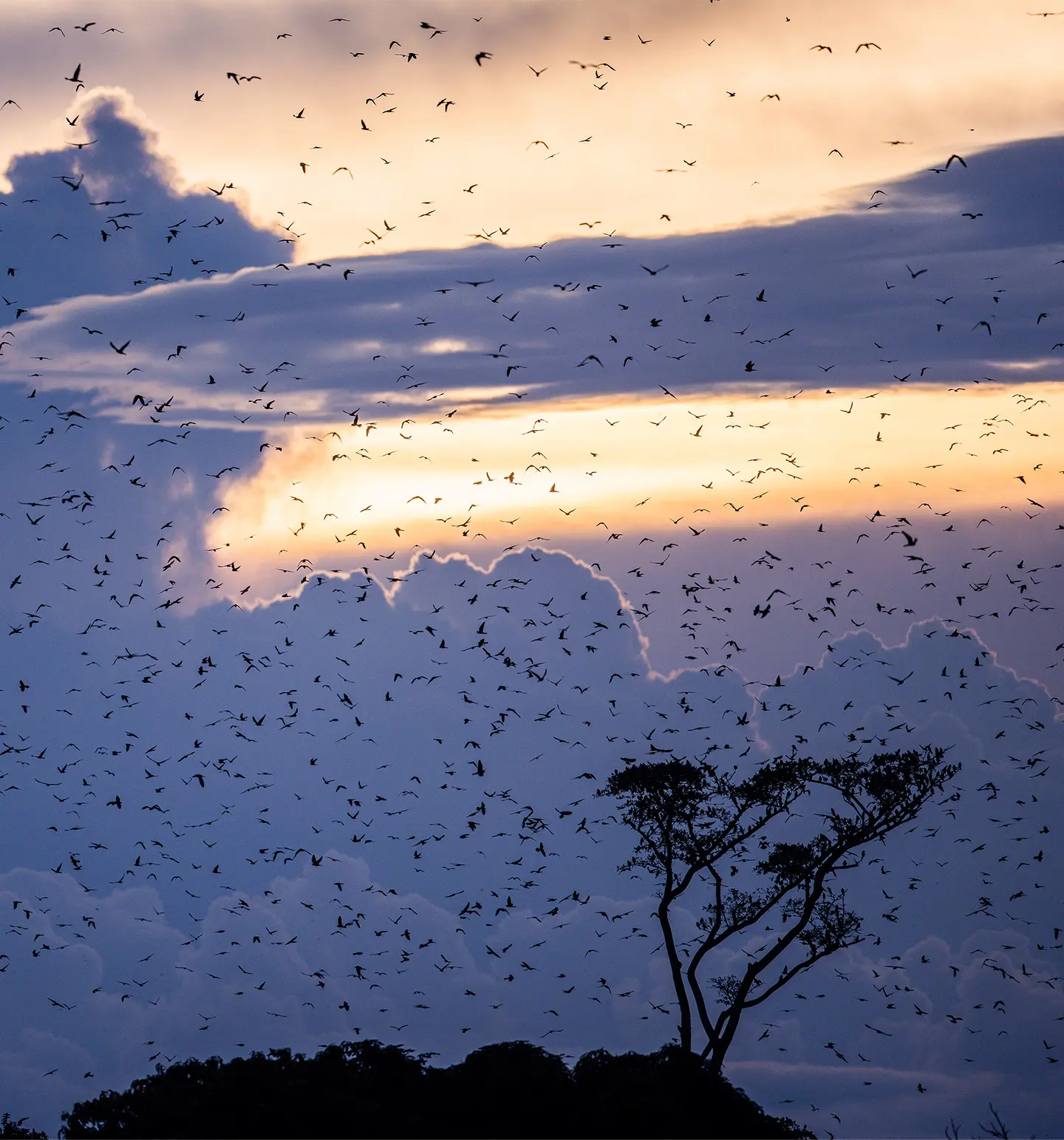
THE LARGEST RAPTOR ROOST ON PLANET EARTH
A small group of ornithologists from Europe set out to find the wintering area of the
Red-footed Falcon.
This small bird of prey is highly social all year-round, forming nesting colonies and also gathering in communal roosts at night
during migration and wintering.
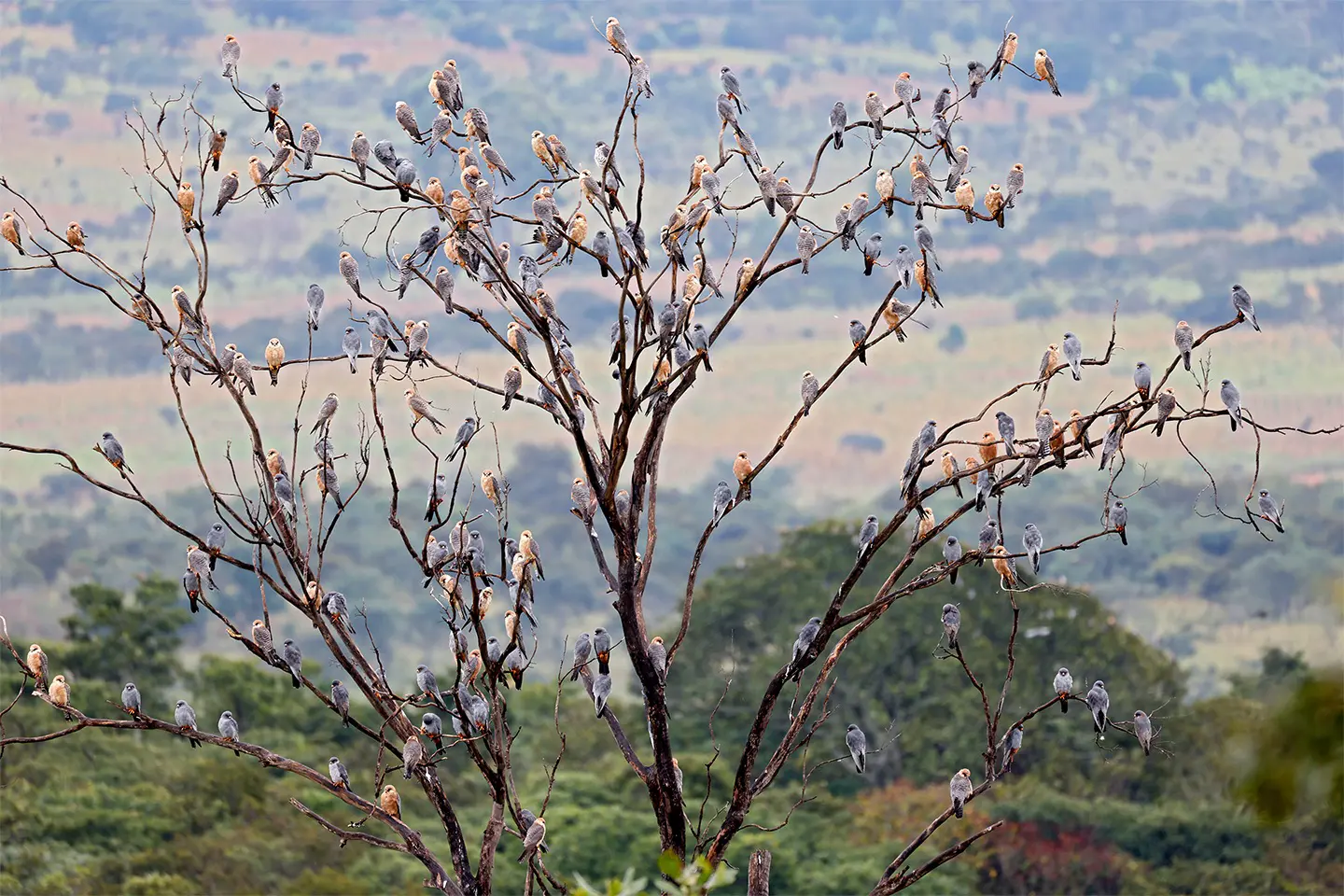
The Red-footed Falcon is a highly social bird of prey, forming nesting colonies during the breeding season and gathering in communal roosts throughout migration and wintering.
FALCOPOLIS explores the largest known roosting site of the species in southern Africa, combining field research, satellite tracking, and visual storytelling.
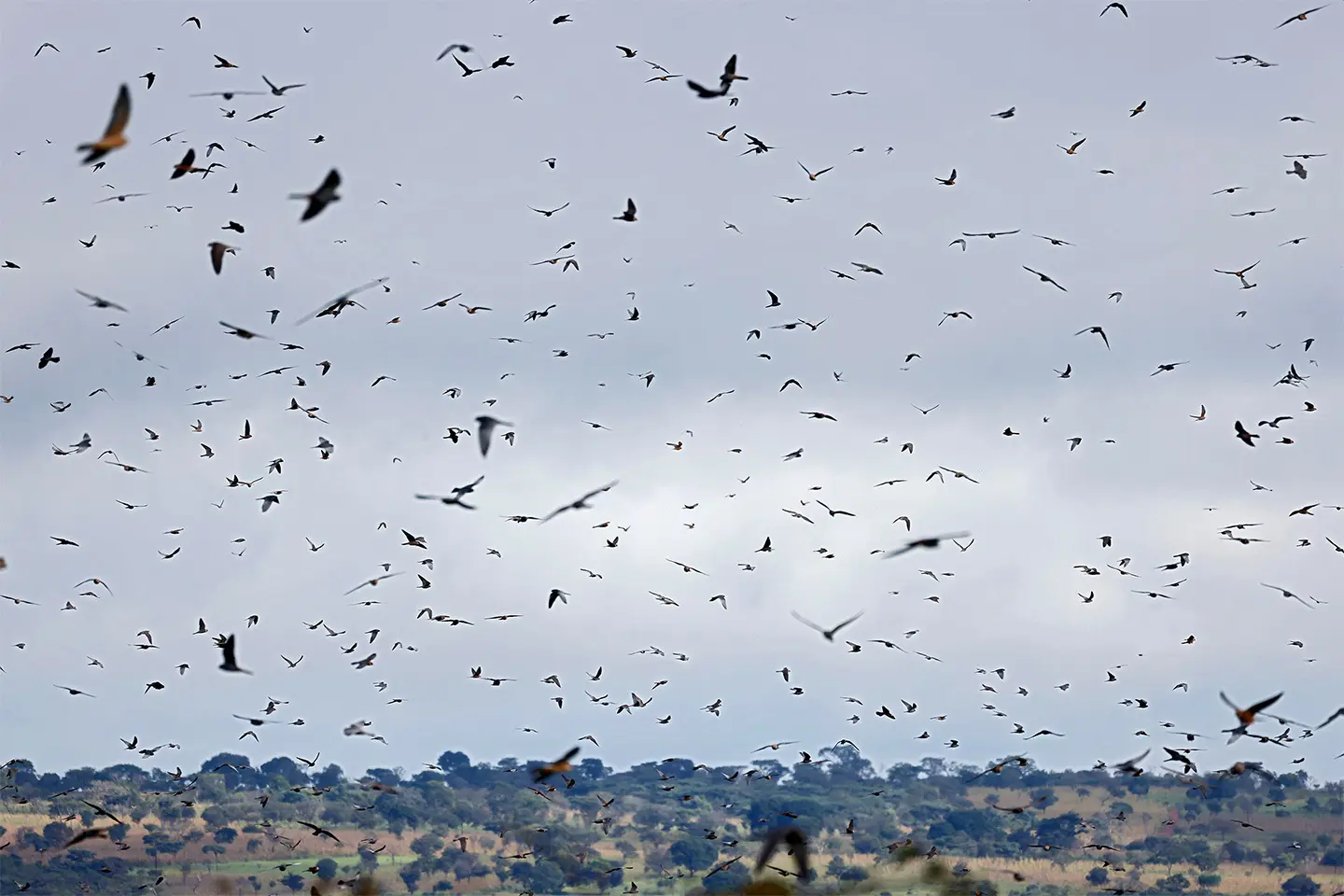
Data showed that all Red-footed Falcons, regardless of gender or origin, visit this remarkable place. They are even joined by individuals of a distant relative, the Amur falcon, which breeds in Far East Asia and migrates to Africa through India.
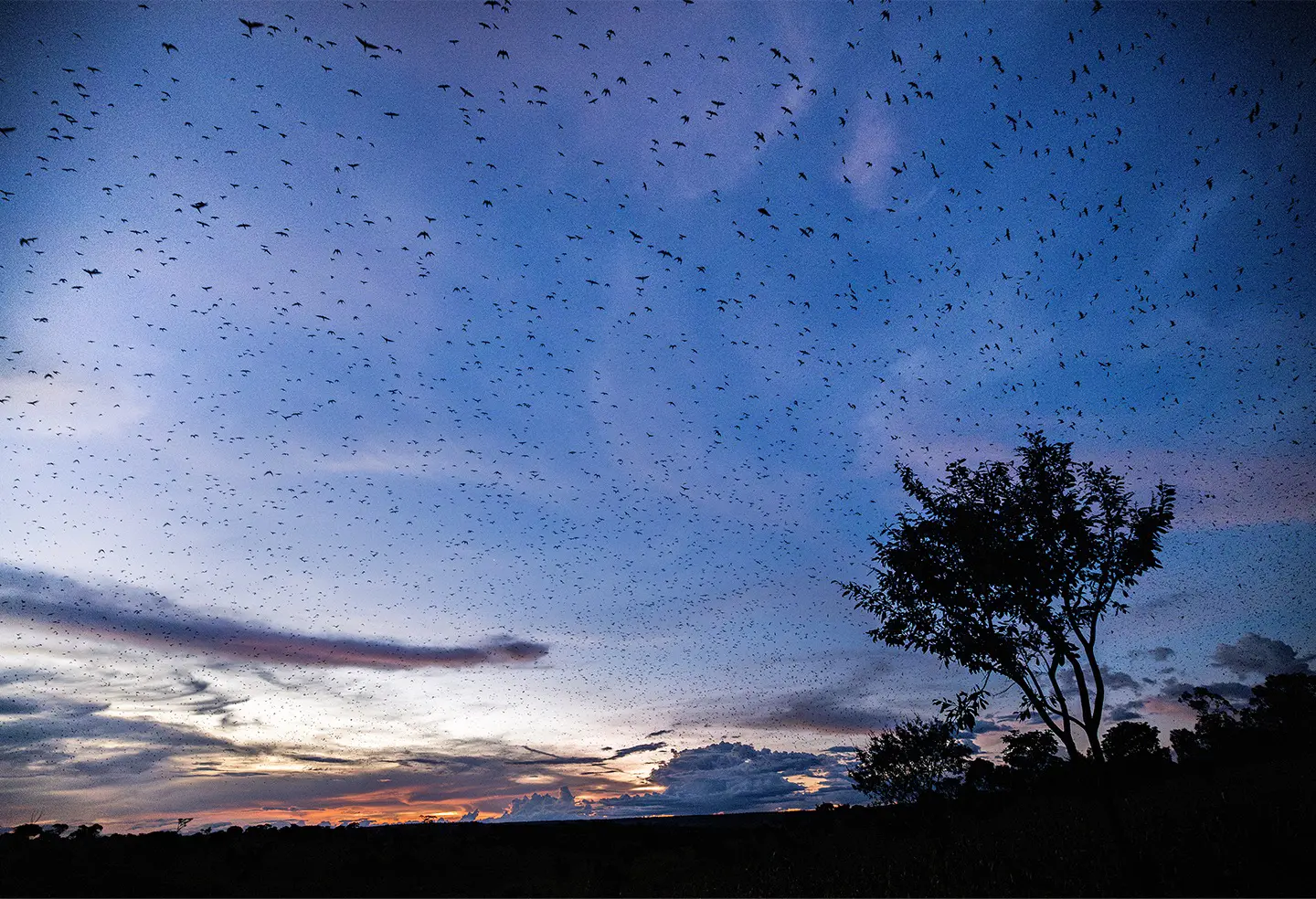
In 2019, the scientific team Dr. Peter Palatitz (MME BirdLife Hungary), Peter Borbáth (Üröm KTE), Dr. Peter Fehérvári (Univ. of Veterinary Budapest) and László Novák (Szatuna Ltd.) photographer visited Huambo province in Angola, where they discovered one huge roost site, the capital of the Red-footed falcons. Here, tens of thousands of falcons gather every evening to roost in large trees, creating a spectacular natural phenomenon.
The discovery was nothing short of extraordinary.
The place was named FALCOPOLIS.
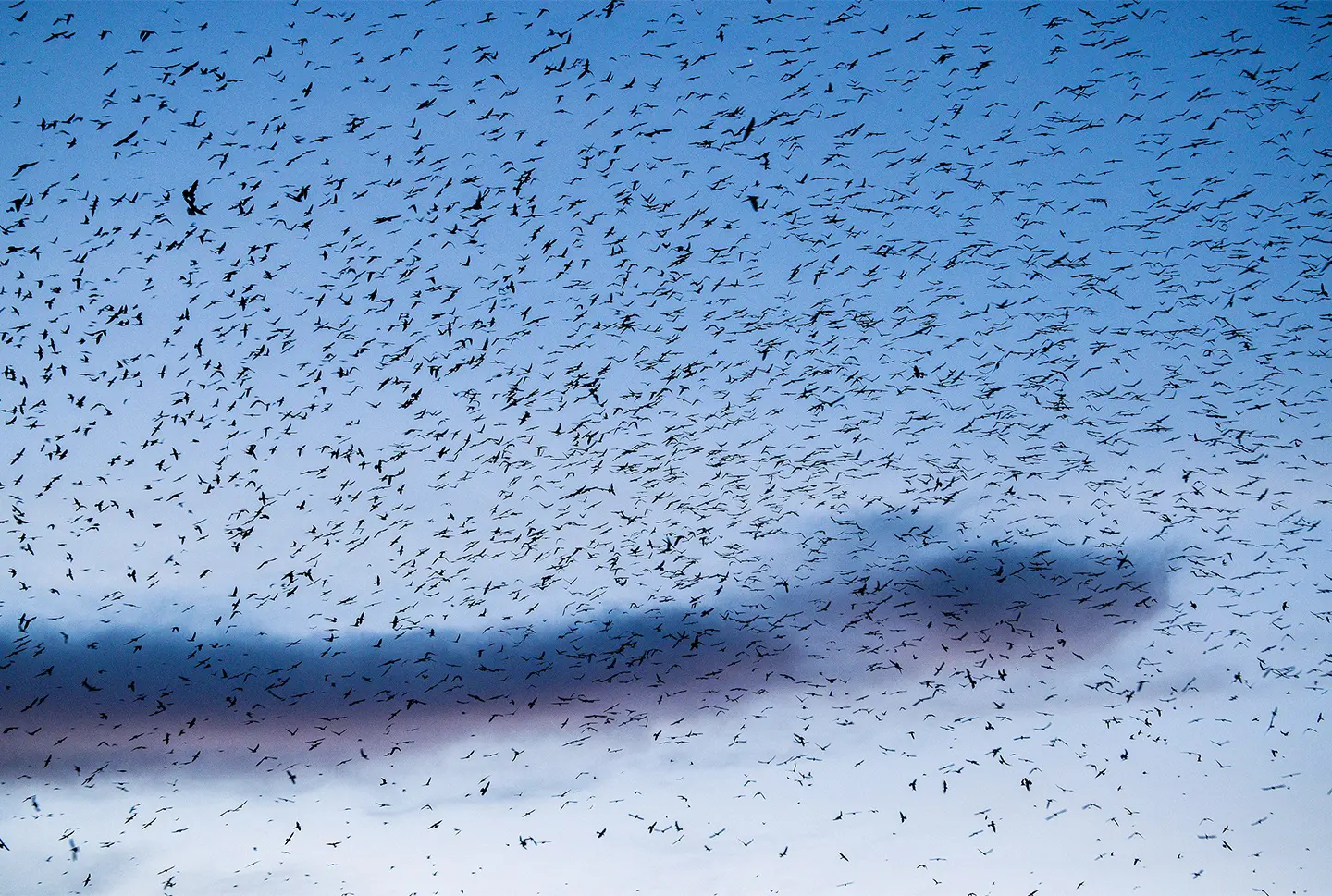
Each evening the sky above the roost site is fully covered by falcons, surpassing previous estimates of the species’ global population.
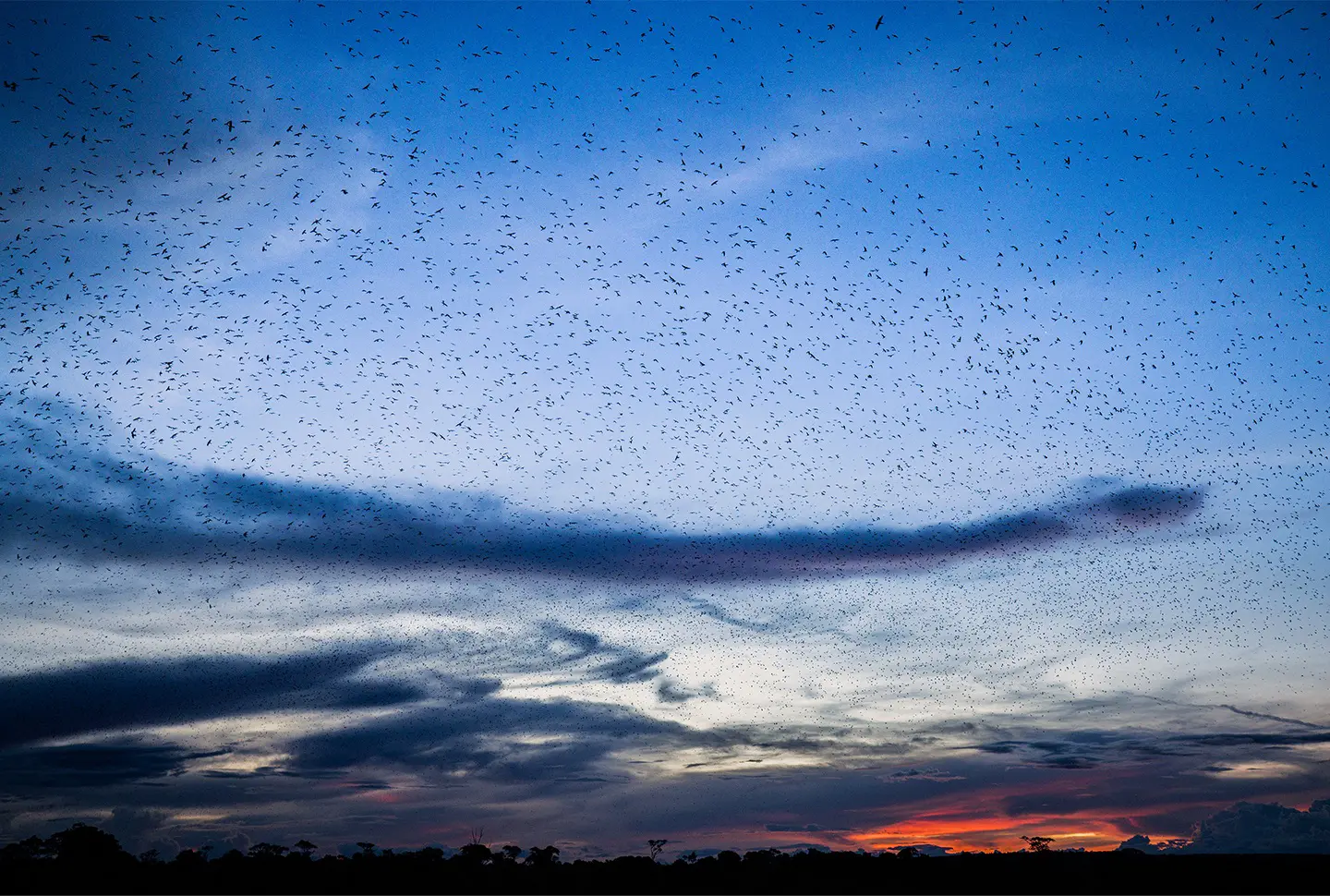
Based on our knowledge, no other species of birds of prey physically meet in such large numbers during the wintering period. This unique natural phenomenon raises a number of intriguing questions, but to find the answers, researchers have had to plunge into the middle of the falcon flocks.
Why FALCOPOLIS is so Important?
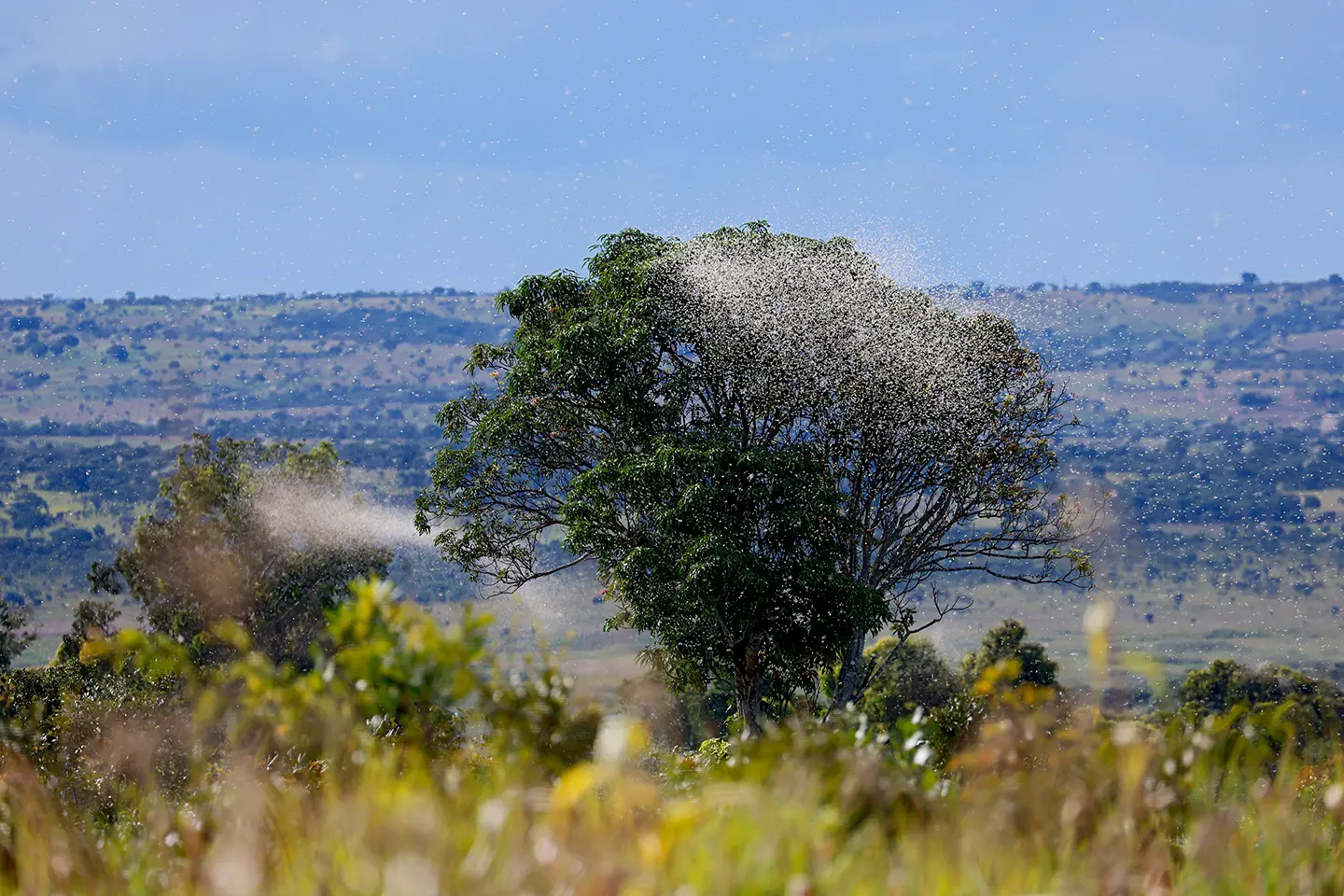
Swarming termites, abundant in central Angola at this time of the year, provide important food for falcons during the winter. Packed with protein, these insects are easy to catch in flight, and are vital for the falcons, helping them build up the fat reserves needed for their northward migration.
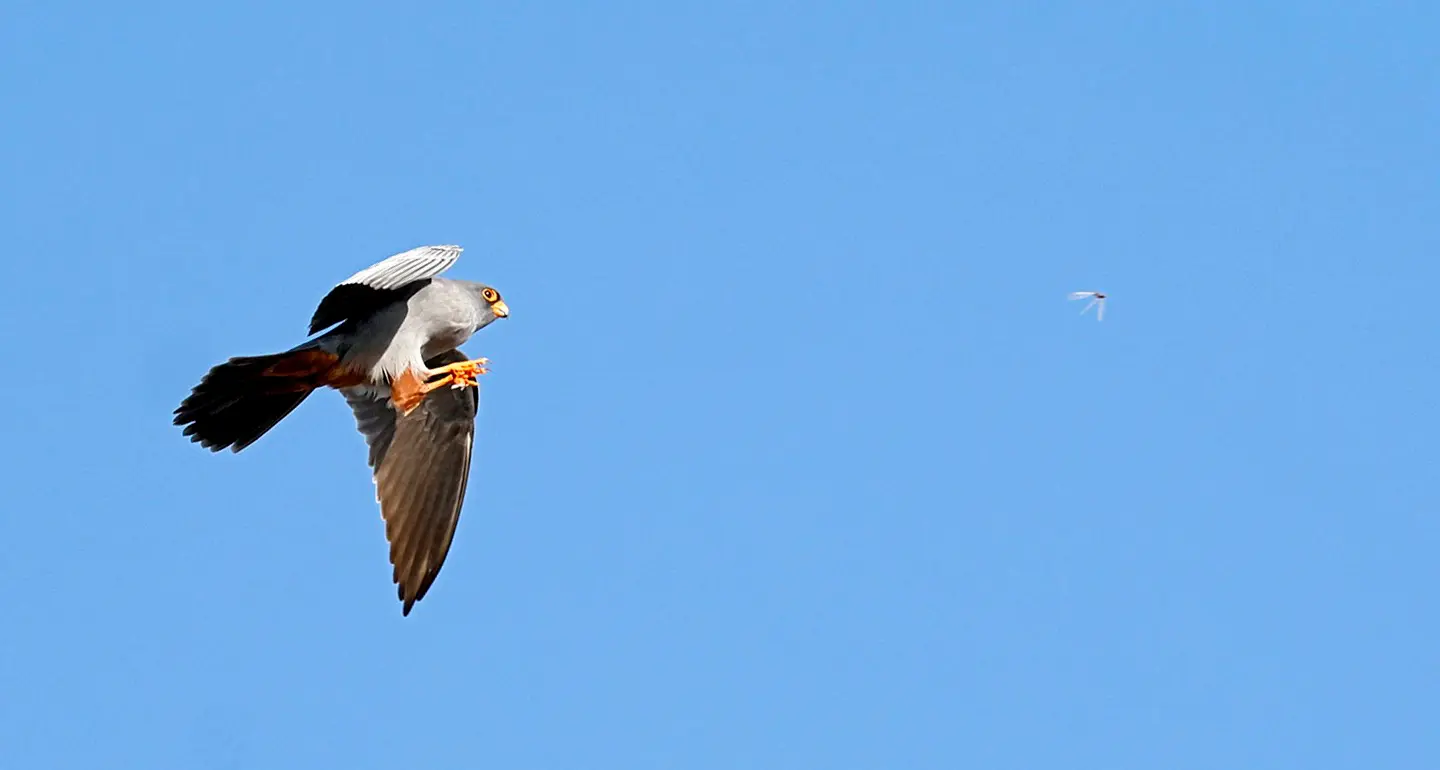
The cooperative behavior of falcons helps them find termite outbreaks.
Falcons eat tons of these insects, considered as agricultural pests, returning the undigested parts as soil fertilizer during the night roosting.